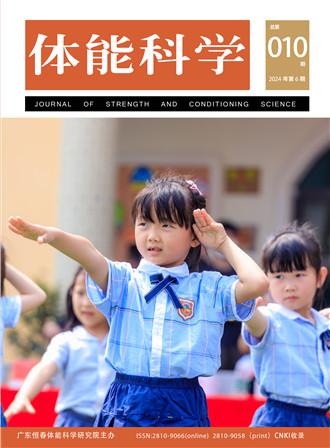
Journal of Strength and Conditioning Science
Physical Fitness Science is supervised by Guangdong Province Physical Fitness Association, sponsored by Guangdong Hengchun Physical Fitness Research Institute, published by Weiser Science and Technology Publishing House. This paper aims to report the frontier theories, methods and achievements of physical training theory and practice in the field of sports science. It is committed to spreading the cutting-edge ideas, methods and means of physical fitness training, exploring the development direction of physical fitness science and popularizing the wide application of physical fitness science training methods and means; Together for the majority of sports workers (enthusiasts) to provide a learning and work exchange interactive platform; It provides useful reference for PE teachers' teaching and training.
Open Access Policy
This journal provides immediate open access to its content on the principle that making research freely available to the public supports a greater global exchange of knowledge, published as open access. Authors retain copyright but licence exclusive rights in their article to the publisher, authors have the right to:
- Share their article in the same ways permitted to third parties under the relevant user licence (together with personal (scholarly) purposes to create certain derivative works), as long as they give proper attribution and credit to the published work.
- Retain patent, trademark and other intellectual property rights (including raw research data).
- Proper attribution and credit for the published work
Creative Commons Attribution-NonCommercial(CC BY-NC-ND):
Allows users to copy and distribute the Article, provided this is not done for commercial purposes and further does not permit distribution of the Article if it is changed or edited in any way, and provided the user gives appropriate credit (with a link to the formal publication through the relevant DOI), provides a link to the license, and that the licensor is not represented as endorsing the use made of the work. The full details of the license are available at https://creativecommons.org/licenses/by-nc-nd/4.0/.
Editorial Policies
Peer Review
Viser Technology Pte. Ltd. follows a double-blind peer-review procedure for submissions of all manuscripts to its journals.
All submitted manuscripts are subjected to a fair, unbiased, and extensive peer review in consultation with the assigned journal's Editorial Board Member and independent internal or external referees (usually two reviewers), which have expertise in the field of the submitted manuscripts. The peer-review applies a short and rapid, but fair and professional assessment on all submitted manuscripts. The journal's Editor-in-Chief is then decided on the submitted manuscripts based on all the peer reviewers' comments before conveying to the author(s).
All submissions from the Editor-in-Chief will undergo independent peer-review and assess by the journal's Editorial Board Member or in-house Editor for the decision on acceptance.
Ethical Approval of Studies and Informed Consent
For human or animal experimental investigations, it is a prerequisite to provide a formal review and approval, or review and waiver, by an appropriate institutional review board or ethics committee, which should be documented in the paper. For investigations undertaken on human subjects, the manner in which the informed consent was obtained from the study participants (i.e., oral or written) should be stated clearly in the Materials and Methods section.
The authors must obtain patient consent either orally or written when they use confidential case material. However, patient consent is not required for very brief case vignettes that do not contain identifying information or if the case material is masked sufficiently to prevent the identification of the patient.
The authors should inform and discuss with the recruiting patients on the purpose(s) of publication, the possible risks and benefits to obtain, and the patient's right to withhold or withdraw consent. In the case of a minor patient, consent should be obtained from the parent(s) or guardian(s). The authors should not perform any misconduct or deceive the recruiting patients in obtaining their consent.
Standard Protocol on Approvals, Registrations, Patients Consents & Animal Protection
Human: All clinical investigations must be conducted according to the Declaration of Helsinki principles, as revised in 2000 and 2008. Authors must comply with the guidelines of the International Committee of Medical Journal Editors (www.icmje.org) in conjunction with the patient's consent for research or participation in a study. Patients' names, initials, or hospital numbers must not be mentioned anywhere in the manuscript (including figures). Editors may request the authors to provide documentation of the formal review and recommendation from the institutional review board or ethics committee responsible for oversight of the study if necessary.
Animals: All original research manuscripts involving the use of animals, the authors should indicate whether relevant international, national, and/or institutional guidelines for the care and use of laboratory animals were conducted accordingly. The authors must include details of animal welfare (such as species, number, gender, age, weight, housing conditions, welfare, training and the fate of the animals at the end of the experiment) and relevant details of steps taken to ameliorate suffering in all works in the Materials and Method section of a manuscript. Similarly, any experiments involving animals from clients or private institutions, the authors are required to get informed client consent and adhere to a high standard (best practice) of veterinary care. These details should be included in the Materials and Methods section of the manuscript.
Publishing Ethics
Publishing Policies
Viser Technology Pte. Ltd. requests all members involved in the journal publishing process to adhere to the "Code of Conduct for Journal Editors" and "Code of Conduct for Journal Publishers" as stipulated by COPE (Committee on Publication Ethics).
The publisher strictly adheres to the guidelines and best practices, which include Recommendations for the Conduct, Reporting, Editing, and Publication of Scholarly Work in Medical Journals from the International Committee of Medical Journals Editors (ICMJE) and the Principles of Transparency and Best Practice in Scholarly Publishing developed by Committee on Publication Ethics (COPE), Directory of Open Access Journals (DOAJ), Open Access Scholarly Publishers Association (OASPA) and World Association of Medical Editors (WAME).
Publications Ethics and Malpractice Statement
As a prestigious peer-reviewed journal we emphasize on publications ethics for editors, reviewers, authors, and publisher very much. We mainly follow the existing SCOPUS requirements and the Committee on Publication Ethics (COPE) Code of Conduct which are widely recognized in the world.
Peer-reviewed articles support and embody the scientific method. It is therefore important to agree upon standards of expected ethical behavior for all parties involved in the act of publishing: the author, the journal editor, the peer reviewer, and the society of TIIS.
Publication and Authorship
An authorship is generally considered to be an individual who has made substantial intellectual contributions to a publication (or an article).
Additional criteria for authorship include the following:
- Substantial contributions to the conception or design of the work or the acquisition, analysis, or interpretation of data for the work
- Drafting the work or revising it critically for important Intellectual content
- Final approval of the version to be published
- Agreement to be accountable for all aspects of the work in ensuring that questions related th the accuracy or integrity of any part of the work are appropriately investigated and resolved
All articles should be original and not published in any other journals before. If an author is using a lengthy text from another source, it should be cited within quotes and the reference should be given properly. Plagiarism or self-plagiarism in any form will never be acceptable.
An article should acknowledge and cite the work of others where appropriate, fully and accurately attributing relevant sources. In general, the article provides a list of references.
The article may acknowledge the funding, support, sponsorship and other forms of input (including that of the university, institute, organization or government) to the work in an appropriate way.
The prospective author must make sure that the submitted article is not under publication consideration or under review in another journal. We will not accept any articles with same exact material from another journal.
If the submitted article is an extended version of the article already presented in a conference, the author should address it in front page of the submitted paper and in addition, the author must submit the preliminary article published in the conference proceedings too. Unless the preliminary article is submitted, We will not accept submission for review. The extended version of the submitted article should add more than 30% substantial contents compared to the preliminary article.
Author's Responsibilities
All authors should agree to make plausible revisions to be suggested by reviewers and the editorial members. If the author refuses to do the revision without acceptable causes, the submitted article will be immediately rejected.
All authors will be required to correct any errors and to withdraw incorrect information in the submitted article.
All authors who have made a significant contribution to the article should be included as co-authors. An inclusion of person(s) who do not contribute in the co-author list is inappropriate. One of co-authors should sign a copyright transfer form before the final publication.
Peer Review/Responsibility for The Reviewers
All of the submitted papers will be peer-reviewed. The name of all reviewers will be blind. All reviewers should be academically qualified to review a submitted article, and they should complete her/his review scores and review comments in time. The review comments will be constructive for authors.
The reviewer should be fair and unprejudiced in reviewing a submitted article.
The reviewer should not have any conflict of interest with the research, author, or the research funding authorities of a submitted article. In case of a conflicting interest, the reviewer should inform the assigned editor of it and the assigned editor will manage the conflict by reassigning required reviewer(s) to the article.
The reviewer should not reveal any information related to the assigned article to other parties.
Editorial Responsibilities
The Editor-in-Chief and editor should preclude business needs from compromising intellectual standards.
- The EIC and editor should ensure the quality of the material they publish.
- The EIC has the authority to make a final decision on the submitted article based on reviewers' and editor's review scores/comments or his/her own discretion.
- The editor can make a preliminary decision on the submitted paper based on reviewers' scores/comments or his/her own discretion. The editor can provide his/her own review comments or suggestions on the submitted paper with EIC.
- The EIC and editor should be fair and should not use prejudice/bias of any kind against the author during the review process.
- The EIC and editor's decisions to accept or reject a paper for publication should be based only on the paper's importance, originality, and clarity, and the study's relevance to the remit of the journal.
- The EIC or any member of the editorial board should not have any conflict of interest regarding the article under consideration.
Anonymity of reviewers as well as the author should be maintained by the EIC and editor during the review process.
When an error is found, the EIC should correct it immediately or withdraw the publication.
Publishing Ethics Issues
Monitoring/safeguarding of the publishing ethics will be maintained by the EIC and the editorial board.
- The EIC with the editorial board should maintain high levels of intellectual and ethical standards, precluding business needs from compromising intellectual standards.
- The EIC should ensure that plagiarism, self-plagiarism, and fraudulent data are not allowed as mentioned above.
- The EIC should be willing to publish corrections, clarifications, withdrawals, and apologies as appropriate when needed.
1. Frontier dynamics: Research on frontier dynamics of physical fitness at home and abroad.
2. Scientific foundation: Anatomy, physiology, biochemistry, mechanics, nutrition and other disciplines.
3. Children's physical fitness :0-6 years old children's physical fitness games, teaching, methods and means, scientific research, etc.
4. School physical fitness: physical fitness teaching, training, methods, scientific research, etc.
5. Mass physical fitness: physical fitness of different people, different ages, different professions and other related issues.
6. Competitive physical fitness: application research of athletes' physical fitness theory, methods and experiments in various events.
7. Special physical fitness: physical fitness of soldiers, police, fire fighting, emergency rescue and other special groups.
8. Physical rehabilitation: research on the application of physical prevention and rehabilitation of injury.
9. Case sharing: sharing of plans, teaching plans, experience, management, operation and other cases.
10. Crossfit: Conduct irregular communication on various issues in the field of crossfit.
ISSN: 2810-9066 (online)
ISSN: 2810-9058 (print)
The publication frequency of this journal is Bi-monthly
| 韩春远 | 华南理工大学 | 中国 |
| 董德龙 | 鲁东大学 | 中国 |
| 杜熙茹 | 广州体育学院 | 中国 |
| 魏际英 | 火箭军工程大学 | 中国 |
| 汪作朋 | 佳木斯大学 | 中国 |
| 杨成 | 成都银杏酒店管理学院 | 中国 |
| 赵佳 | 山东师范大学 | 中国 |
| 曾小玲 | 广东职业技术大学 | 中国 |
| 陈静文 | 北京大学珠海校区 | 中国 |
| 陈召 | 郑州轻工业大学 | 中国 |
| 董德龙 | 鲁东大学 | 中国 |
| 杜熙茹 | 广州体育学院 | 中国 |
| 韩春远 | 华南理工大学 | 中国 |
| 胡恩亮 | 中国民航飞行学院 | 中国 |
| 胡飞 | 安徽师范大学 | 中国 |
| 胡海旭 | 南京体育学院 | 中国 |
| 何建伟 | 广州大学 | 中国 |
| 金旭东 | 云南民族大学 | 中国 |
| 刘次秦 | 江门幼儿师范专科学院 | 中国 |
| 刘书芳 | 广州体育学院 | 中国 |
| 罗少松 | 湘南学院 | 中国 |
| 李婷 | 湖州师范学院 | 中国 |
| 李威 | 湖州师范学院 | 中国 |
| 李雪 | 成都体育学院 | 中国 |
| 梁小静 | 华南理工大学 | 中国 |
| 梁诺 | 华南理工大学 | 中国 |
| 李邑 | 广州黄广中学 | 中国 |
| 牛雪松 | 沈阳体育学院 | 中国 |
| 秦庆峰 | 滇池学院 | 中国 |
| 宋绍兴 | 华南理工大学 | 中国 |
| 沈志峰 | 陆军特战学院 | 中国 |
| 武大伟 | 哈尔滨体育学院 | 中国 |
| 王祁雅莉 | 北京体育大学 | 中国 |
| 王顺熙 | 华南农业大学 | 中国 |
| 王统领 | 湖州师范学院 | 中国 |
| 王卫星 | 北京体育大学 | 中国 |
| 武传钟 | 广州商学院 | 中国 |
| 魏巍 | 上海体育大学 | 中国 |
| 王智明 | 南京体育学院 | 中国 |
| 魏际英 | 火箭军工程大学 | 中国 |
| 汪作朋 | 佳木斯大学 | 中国 |
| 肖梅 | 潮州幼儿师范学院 | 中国 |
| 许余有 | 广东司法警官学院 | 中国 |
| 徐晓阳 | 华南师范大学 | 中国 |
| 张凤彪 | 湖南工业大学 | 中国 |
| 张金梅 | 巢湖学院 | 中国 |
| 卓金源 | 中国人民大学 | 中国 |
| 赵佳 | 山东师范大学 | 中国 |
| 钟少婷 | 广东省二沙体育训练中心 | 中国 |
| 曾小玲 | 广东轻工职业技术大学 | 中国 |
| 张莹 | 杭州师范学院 | 中国 |
| 程孟良 | 广东司法警官学院 | 中国 |
| 魏公博 | 哈尔滨体育学院 | 中国 |
| 娄方平 | 重庆大学体育学院 | 中国 |
Email: viser-tech@outlook.com
Submit and Check
Registration and login are required to submit items online and to check the status of current submissions. To register, click the register button below. If you already have an account, proceed to login through the following with your username and password.
Latest Issue
Archives
Search
Volume 5, Issue 6, 2025
传统体育课程群与双创教育深度融合的第二课堂构建与实践
王程辉, 冯卫平, 陈海雁
Journal of Strength and Conditioning Science
|
Volume 5 Issue 6, 2025
|
PDF
DOI: 10.33142/jscs.v5i6.18083
羽毛球相关产品生产发展研究:品牌兴起、赛事联动与产业建议
杨江北
Journal of Strength and Conditioning Science
|
Volume 5 Issue 6, 2025
|
PDF
DOI: 10.33142/jscs.v5i6.18084
核心力量对队列动作的影响研究
李琛达, 肖斌
Journal of Strength and Conditioning Science
|
Volume 5 Issue 6, 2025
|
PDF
DOI: 10.33142/jscs.v5i6.18085
民族文化与融媒体融合视角下县域足球产业创新路径研究——以东兴市为例
朱帆赤旗, 刘旭明, 杜云姝
Journal of Strength and Conditioning Science
|
Volume 5 Issue 6, 2025
|
PDF
DOI: 10.33142/jscs.v5i6.18086
跆拳道本科专业学生创新创业能力培养路径研究
冯卫平, 王程辉, 李满湘
Journal of Strength and Conditioning Science
|
Volume 5 Issue 6, 2025
|
PDF
DOI: 10.33142/jscs.v5i6.18087
我国马拉松赛事公共服务的现状反思与路径构建
陈一诺
Journal of Strength and Conditioning Science
|
Volume 5 Issue 6, 2025
|
PDF
DOI: 10.33142/jscs.v5i6.18088
核心力量训练对大学生体质测试成绩的影响研究
华传峰, 王智明
Journal of Strength and Conditioning Science
|
Volume 5 Issue 6, 2025
|
PDF
DOI: 10.33142/jscs.v5i6.18089
北京体育大学校女篮备战2025赛季SCBA联赛赛前体能训练研究
李金达, 魏宏文, 李铭佳, 孙梦然, 孔俊皓
Journal of Strength and Conditioning Science
|
Volume 5 Issue 6, 2025
|
PDF
DOI: 10.33142/jscs.v5i6.18090
区域一体化下全运会武术项目助推粤港澳体育湾区建设探析
唐朝
Journal of Strength and Conditioning Science
|
Volume 5 Issue 6, 2025
|
PDF
DOI: 10.33142/jscs.v5i6.18091
田径运动文化产业发展现状研究
高俊霞
Journal of Strength and Conditioning Science
|
Volume 5 Issue 6, 2025
|
PDF
DOI: 10.33142/jscs.v5i6.18092
宾果游戏联合运动对城市老年人步态及认知功能的影响
卫国庆, 景基泽, 刘森, 乔天鹏
Journal of Strength and Conditioning Science
|
Volume 5 Issue 6, 2025
|
PDF
DOI: 10.33142/jscs.v5i6.18093
基于小学体育兴趣化的课堂情境化教学研究
王万莉, 尤靖
Journal of Strength and Conditioning Science
|
Volume 5 Issue 6, 2025
|
PDF
DOI: 10.33142/jscs.v5i6.18094
“双减”政策下影响中小学生参与课外体育活动因素研究
孙韩雨祺, 韩立娟, 辛静, 何建伟
Journal of Strength and Conditioning Science
|
Volume 5 Issue 6, 2025
|
PDF
DOI: 10.33142/jscs.v5i6.18095
体教融合背景下退役运动员转型学校教练员的价值内涵、现实困囿与调适机制研究
陈奥娜, 郭成根
Journal of Strength and Conditioning Science
|
Volume 5 Issue 6, 2025
|
PDF
DOI: 10.33142/jscs.v5i6.18096
鄂伦春射箭:跨学科视角下青少年身心健康影响机制研究
王毕星
Journal of Strength and Conditioning Science
|
Volume 5 Issue 6, 2025
|
PDF
DOI: 10.33142/jscs.v5i6.18097
军校学员课后1.5小时数字化体能训练管理模式研究
叶伟
Journal of Strength and Conditioning Science
|
Volume 5 Issue 6, 2025
|
PDF
DOI: 10.33142/jscs.v5i6.18098
人工智能技术赋能运动生理课程思政改革路径探索
李涛
Journal of Strength and Conditioning Science
|
Volume 5 Issue 6, 2025
|
PDF
DOI: 10.33142/jscs.v5i6.18099
日本足球发展的经验及对广东省高校足球的启示
康济河
Journal of Strength and Conditioning Science
|
Volume 5 Issue 6, 2025
|
PDF
DOI: 10.33142/jscs.v5i6.18100
肌电生物反馈疗法对前交叉韧带重建术后康复效果的研究
郭杨博, 郭秋菱, 窦俊杰, 刘义豪
Journal of Strength and Conditioning Science
|
Volume 5 Issue 6, 2025
|
PDF
DOI: 10.33142/jscs.v5i6.18101
粤港澳大湾区赋能遂溪县生态体育旅游发展路径研究
姜伟利, 黄瑞敏
Journal of Strength and Conditioning Science
|
Volume 5 Issue 6, 2025
|
PDF
DOI: 10.33142/jscs.v5i6.18102
新大纲背景下军事体育课程“教、练、战”一体化教学模式研究
孙英智, 时守祥
Journal of Strength and Conditioning Science
|
Volume 5 Issue 6, 2025
|
PDF
DOI: 10.33142/jscs.v5i6.18103
高职毽球课程与学生职业素养培养的融合探析
田国苹
Journal of Strength and Conditioning Science
|
Volume 5 Issue 6, 2025
|
PDF
DOI: 10.33142/jscs.v5i6.18104
促睾类运动补剂对男性性功能影响的科学证据与宣传误导
王玺毓, 董佳康, 李宇辉, 马孜奥, 金德馨
Journal of Strength and Conditioning Science
|
Volume 5 Issue 6, 2025
|
PDF
DOI: 10.33142/jscs.v5i6.18105
体育中考应试化倾向的家校社协同纾解路径研究
贺薇霞, 马鑫, 史胜宇
Journal of Strength and Conditioning Science
|
Volume 5 Issue 6, 2025
|
PDF
DOI: 10.33142/jscs.v5i6.18106
每天两小时体育活动的目标逻辑、挑战与路径探索
林婷婷, 涂开雄
Journal of Strength and Conditioning Science
|
Volume 5 Issue 6, 2025
|
PDF
DOI: 10.33142/jscs.v5i6.18107
数字赋能高校健美操教学改革--北科大实践研究
文秀丽
Journal of Strength and Conditioning Science
|
Volume 5 Issue 6, 2025
|
PDF
DOI: 10.33142/jscs.v5i6.18108
数字科技赋能运动员体能表现提升及个性化训练范式探索
武传钟, 艾冬生, 冯俣睿
Journal of Strength and Conditioning Science
|
Volume 5 Issue 6, 2025
|
PDF
DOI: 10.33142/jscs.v5i6.18109
健康中国目标下社区公共体育服务体系构建策略分析
郭琴
Journal of Strength and Conditioning Science
|
Volume 5 Issue 6, 2025
|
PDF
DOI: 10.33142/jscs.v5i6.18110
This journal charges an article processing charge of S$ 0.00 (Singapore Dollars)
Viser Technology provides the following payment channels. Upon reception of the invoice from Viser, you may choose one of the following payment methods that suit you the most.
Bank Transfer / Wire Transfer
- Bank: DBS Bank Ltd
- Account Name: Viser Technology Pte Ltd
- Account No.: 023-906417-5
- Swift Code: DBSSSGSG
Alipay / Wechat Pay
Scan the following QR code for payment

UnionPay
Viser supports payments via UnionPay. If you wish to make the payment using a UnionPay enabled credit/debit card, please contact us at viser-tech@outlook.com to request for the payment link to be sent to your email address. Once you have received the payment request email, click on the link to go to the secure UnionPay payment page to complete the payment.
In your payment request email, please indicate the following information:
- Author Name(s)
- Article Number
- Article Title
- Journal Title
Should you encounter any problem related to payment, please contact viser-tech@outlook.com for assistance.